
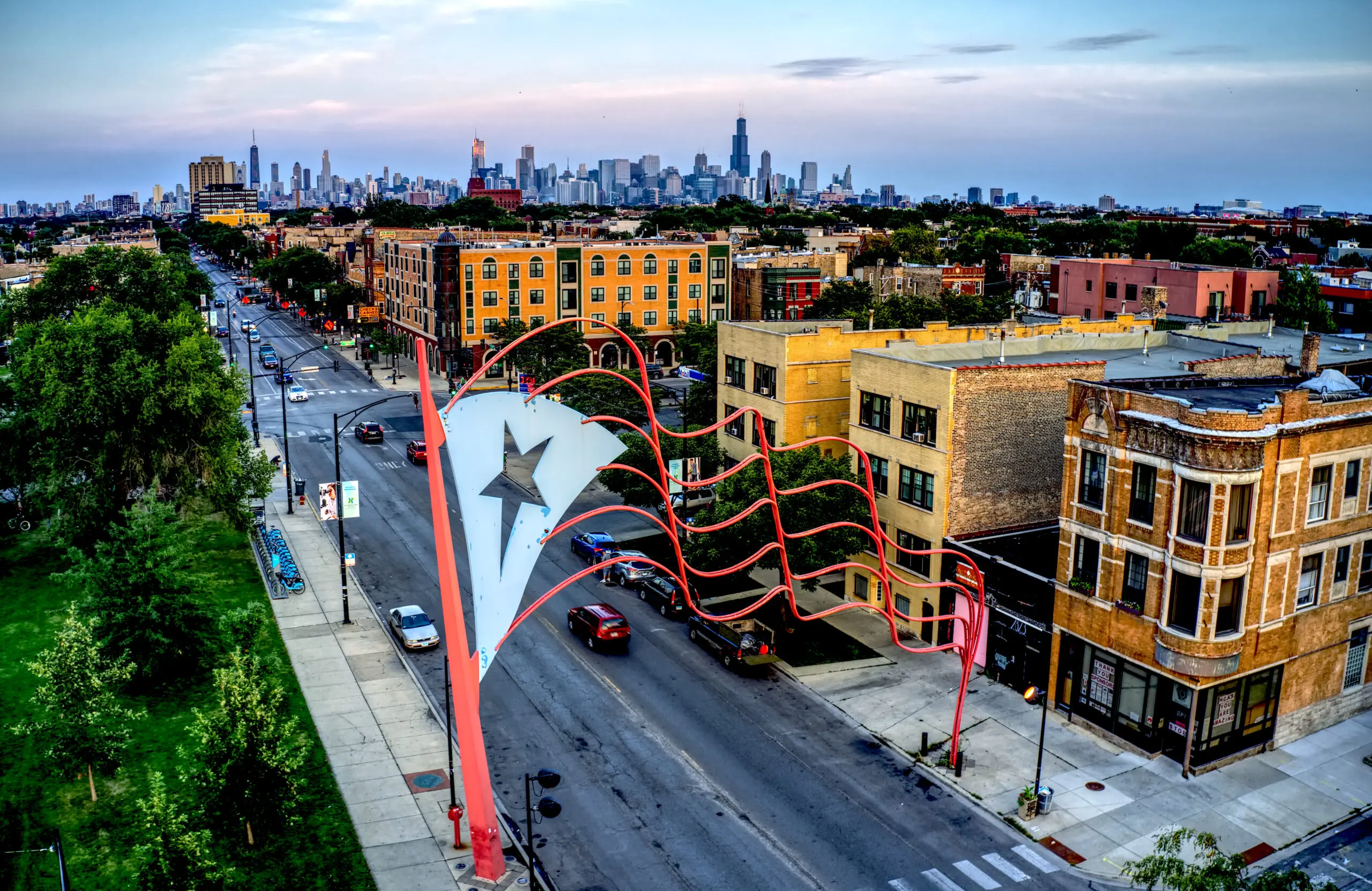
Community Coalition Hub

Community Coalition Partners
%20(2).jpg)

Each SC2 community coalition is required to provide the five core services: Street Outreach, Case Management, Clinical & Non-Clinical Behavioral Health, Education, and Employment. Community-based organizations (CBOs) work alongside the SC2 Implementation Team to determine annual goals for service provision according to capacity.
The figures represented show all participants who have been served or are currently being served through each respective core service in relation to each service goal. Services are provided by any participating CBO within the Humboldt Park Coalition.
For example, a participant may be received by an agency that provides Street Outreach services and referred to a different agency that provides Behavioral Health Services. Part of the continual capacity-building support provided to CBOs is ensuring strong communication between service providers in the interest of maintaining seamless referrals between Humboldt Park providers.
Data updated through 6/30/2026.
Participants served by SC2 in Humboldt Park contribute to SC2's broader goal of reaching 75% of the highest risk individuals across Chicago.
‘Served’ participants refer to those who have completed intake and have been referred to additional core services. Served participants are actively engaged in services but have not yet reached the criteria for completion. SC2 participants are designated as ‘Completed’ once they have received at least three of the five core services (Street Outreach, Case Management, Behavioral Health, Employment, or Education) AND have EITHER completed an employment program, are placed in a job, or have completed education requirements toward a degree.
Data updated through 6/30/2026.

Turning 21 in January 2025 was more than just another birthday for Jadain. It meant the start of adulthood – the first page of a new chapter – but it also meant that he’d reached a milestone he wasn’t sure he’d live to see.
Having the confidence and stability to envision his own future as an adult is the direct result of his time with his peer mentor, DeAngelo, an SC2 case manager at New Life.
"At the time, I was on a downhill slope, I was going through a lot mentally...DeAngelo helped a lot with that. He kept me on a narrow path. He wouldn’t let me lose focus. He became a friend, honestly. We just clicked. It was easy to be comfortable around him and get stuff off my chest.”
Before SC2 enrollment, Jadain noticed a pattern in his life: spending time around negative influences and engaging in behaviors that could have led to serious consequences. “It’s two options—death or jail,” he said, reflecting on the path he felt he was on. Mentorship was pivotal in opening his mind to new possibilities: career paths, further education, and investing time in his personal passions.
Steady income and a positive work environment were a major stabilizing force for Jadain, along with consistent mentorship. He has also honed his drawing skills through New Life’s arts program and has been commissioned by a local business to develop custom artwork. In the meantime, he’s considering giving college another go, preparing his application to paramedic school at Malcolm X – City College of Chicago.
“I’ve always wanted to do something in that area, like firefighting,” he says, “It’s just calling to me. It’s saving lives. It’s helping people every day.”
For DeAngelo, Jadain’s progress reflects what community-based mentorship can accomplish when trust is built. As DeAngelo describes it, mentors can connect young people not just to services but to the community itself.
"Before we got here, there wasn’t really a relationship between the guys on the block and the people in this building,” Deangelo says. “There wasn't a lot of trust between case workers and the streets. Now...they come in every week, they know the staff, and it’s more like a community thing. Instead of keeping an eye on each other or avoiding each other, we're keeping each other safe."
The tears Jadain shed on his birthday weren’t just for the friends he lost—they were for the realization that he’s still here, and that his story is still being written.
Story courtesy of New Life Centers and the Humboldt Park coalition.